Croatian Sheepdog
Croatian Sheepdog: Temperament, Care, Training and Everyday Life
The Croatian Sheepdog is an intelligent, agile and highly trainable herding breed originating from Croatia. For centuries, these dogs were selected primarily for their ability to work with livestock, and their appearance has reportedly remained remarkably consistent since at least the 14th century.
Historical records describe a medium-sized black dog with a curly coat, short hair on the head and erect or semi-erect ears. The breed traditionally worked with different types of farm animals and developed strong natural herding abilities. Today, the Croatian Sheepdog can still perform traditional farm work but is also well suited to various dog sports and can become an affectionate household companion.
However, this is an active working breed rather than a naturally low-energy pet. Prospective owners should understand its need for physical activity, mental stimulation, training and close involvement in everyday life before deciding whether the Croatian Sheepdog is the right breed for them.
Where does the Croatian Sheepdog come from?
The Croatian Sheepdog originates from the Republic of Croatia and has a documented history extending back several centuries. According to historical records associated with the breed, an early written description dates from 1374 and refers to a dog called Canis pastoralis croaticus.
The historical description already mentioned characteristics that remain typical of the breed today, including its medium size, black curly coat, short hair on the head and erect or semi-erect ears. The dogs were valued for their ability to guard and manage different types of livestock.
A systematic breeding programme was started in 1935 by veterinarian Professor Stjepan Romic using dogs from the area around Djakovo. After several decades of organised breeding work, the Croatian Sheepdog was recognised by the FCI in 1969.
How big does a Croatian Sheepdog get?
The Croatian Sheepdog is a medium-sized breed. According to the provided breed standard, both males and females should measure between 40 and 50 cm at the withers.
The body is slightly longer than the height at the withers, giving the dog a somewhat elongated outline. Despite its working ability, the Croatian Sheepdog should not appear heavy. Its construction is relatively light, agile and suitable for active movement.
The provided breed standard does not specify an official weight range. Individual body weight therefore depends on factors such as height, sex, build and physical condition. A healthy Croatian Sheepdog should maintain an athletic body condition appropriate for an active herding breed.
How long does a Croatian Sheepdog live?
The provided breed standard does not specify an official life expectancy for the Croatian Sheepdog. As with any breed, individual longevity can be influenced by genetics, breeding, nutrition, exercise, body condition and access to appropriate veterinary care.
Prospective owners should ask breeders about the health and longevity of dogs within their breeding lines and should prioritise responsible breeding practices when choosing a puppy.
What is the temperament of a Croatian Sheepdog?
The Croatian Sheepdog is described in the breed standard as lithe, keen and modest, with a temperament that makes the dog relatively easy to train. Its long history as a working livestock dog has also contributed to strong attentiveness and a willingness to respond quickly to its environment.
These characteristics can make the breed highly rewarding for people who enjoy actively working with their dogs. However, intelligence and alertness also mean that the Croatian Sheepdog needs appropriate guidance and meaningful activities.
A dog that receives insufficient stimulation may look for its own ways to stay occupied. Consistent training and regular opportunities to use both body and mind are therefore important parts of responsible ownership.
Is the Croatian Sheepdog a good family dog?
The provided breed description identifies the Croatian Sheepdog as a lovable house pet in addition to its traditional role as a herding and watchdog. This means the breed can combine working ability with life as a companion.
However, prospective owners should remember that generations of selection for practical livestock work have created an active and attentive dog. The Croatian Sheepdog is generally better suited to households that want to involve their dog in regular activities than to people looking for a very passive companion.
Close involvement in everyday family life, regular exercise and structured mental stimulation can help the dog adapt successfully to life as a household companion.
Are Croatian Sheepdogs good with children?
The provided breed standard does not specifically describe the Croatian Sheepdog’s behaviour towards children. Individual compatibility therefore depends on the dog’s temperament, socialisation, previous experiences and the behaviour of the children.
As an active herding breed, some individuals may react to fast movement and excitement. Appropriate training can help teach calm behaviour around running and playing children.
Children should learn to respect the dog’s boundaries and should not disturb it while sleeping, eating or resting. Interactions between dogs and young children should always be supervised by an adult.
Does the Croatian Sheepdog have a strong herding instinct?
Yes. A strong hereditary instinct for herding livestock is one of the defining characteristics mentioned in the breed description. Croatian Sheepdogs were historically selected according to their practical usefulness when working with sheep, cattle and other farm animals.
This instinct can influence behaviour even when the dog does not live or work on a farm. Some herding dogs may attempt to control movement in their environment, particularly when they become excited.
Owners should provide appropriate outlets for the dog’s natural abilities and teach alternative behaviours where herding-related behaviour becomes undesirable in everyday situations.
Is the Croatian Sheepdog a good watchdog?
The provided breed description specifically identifies the Croatian Sheepdog as a very good watchdog. Its alertness and attentiveness to its surroundings can make it quick to notice unusual activity around the home or property.
Good watchdog behaviour should remain manageable. Owners should teach the dog when alerting is appropriate and when it is expected to settle again.
Excessive territorial behaviour or uncontrolled reactions towards ordinary visitors should not be encouraged simply because the breed has natural watchdog qualities.
Is the Croatian Sheepdog easy to train?
According to the breed standard, the Croatian Sheepdog can be easily trained. Its intelligence, agility and working background can make it a responsive training partner.
Training should nevertheless be consistent and engaging. Intelligent working dogs often learn quickly but may also become bored when exercises are excessively repetitive.
Short, varied and reward-based training sessions can be particularly useful. Basic skills such as recall, lead walking, waiting calmly and settling should be introduced early.
Because the breed can also be trained for different dog sports, owners who enjoy structured training may find many opportunities to develop the dog’s abilities.
How much exercise does a Croatian Sheepdog need?
The breed standard does not specify an exact daily exercise requirement. However, the Croatian Sheepdog was developed as an active livestock-working breed and is described as agile and suitable for different dog sports.
Prospective owners should therefore expect to provide regular daily physical activity rather than relying only on short walks around the neighbourhood.
Depending on the individual dog, suitable activities may include longer walks, hiking, structured play, training and appropriate dog sports.
Exercise should always be adjusted to age, physical development and health. Puppies should not be subjected to excessive repetitive impact while their bodies are still developing.
How much mental stimulation does a Croatian Sheepdog need?
Mental stimulation is particularly important for a breed developed to make decisions and respond to livestock while working. Physical exercise alone may not provide sufficient stimulation for an intelligent Croatian Sheepdog.
Training exercises, scent work, problem-solving activities and structured dog sports can provide valuable mental challenges.
Owners do not necessarily need to keep livestock to provide meaningful work. Regular training and activities that require concentration and cooperation can offer alternative outlets for the dog’s abilities.
Which dog sports are suitable for Croatian Sheepdogs?
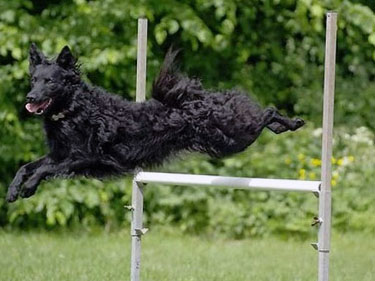
The breed description specifically states that the Croatian Sheepdog can be easily trained for different kinds of dog sports. Its agility, intelligence and willingness to learn can make it suitable for a wide range of activities.
Depending on the individual dog, possible activities may include agility, obedience, rally obedience, herding activities, scent work and other training-based sports.
The best activity is one that suits the individual dog’s temperament and physical condition while providing enjoyable cooperation between dog and owner.
Can a Croatian Sheepdog live without working livestock?
Yes. Although the breed possesses a strong hereditary herding instinct, a Croatian Sheepdog does not necessarily need to work with livestock in order to live a fulfilling life.
However, owners should provide alternative activities that challenge the dog mentally and physically. Training, dog sports, scent work and active outdoor activities can help satisfy its need for engagement.
A lifestyle that provides neither traditional work nor meaningful alternative activities may be less suitable for this intelligent working breed.
Can a Croatian Sheepdog live in an apartment?
The provided breed standard does not specify whether the Croatian Sheepdog is suitable for apartment living. In practice, the breed’s medium size can make apartment living physically possible, but its activity level and alertness must be considered.
A Croatian Sheepdog living in an apartment still needs sufficient daily exercise, mental stimulation and opportunities to explore outside the home.
Its watchdog qualities may also require training in buildings with frequent noises from neighbours, corridors or shared entrances.
A garden can be convenient but does not replace regular walks, training and interaction with the owner.
Can a Croatian Sheepdog be left alone?
The provided breed standard does not give specific information about how long Croatian Sheepdogs can comfortably remain alone.
As with other companion and working dogs, the ability to remain alone should be introduced gradually. Puppies should first experience very short periods of separation before the duration is slowly increased.
An active and intelligent dog that regularly spends excessive periods alone without adequate activity may become bored or frustrated. The breed is therefore generally better suited to owners who can provide regular interaction and meaningful engagement.
Are Croatian Sheepdogs suitable for first-time owners?
The Croatian Sheepdog’s trainability can be an advantage for a committed first-time owner. However, its intelligence, activity level, herding instincts and watchdog qualities mean that it still requires consistent training and sufficient engagement.
A first-time owner who enjoys training and wants an active dog may find the breed rewarding. Someone looking for a low-energy companion requiring minimal daily involvement may find it considerably more demanding.
Working with a qualified reward-based trainer can be particularly helpful during puppyhood and adolescence.
Do Croatian Sheepdogs get along with other dogs?
The provided breed standard does not specifically describe the breed’s general compatibility with other dogs. Social behaviour can therefore vary between individuals.
Early positive experiences with stable and appropriate dogs can help puppies develop good communication skills. The goal of socialisation should be calm and manageable behaviour rather than expecting every adult dog to enjoy playing with every unfamiliar dog.
Can Croatian Sheepdogs live with cats and other pets?
The provided breed standard does not specifically address compatibility with cats or small household animals.
Because individual behaviour can vary, introductions should be gradual and supervised. Dogs raised with cats from a young age may find it easier to accept them as members of the household.
The breed’s tendency to react to movement should also be considered. Appropriate training may be necessary to prevent unwanted chasing or attempts to control the movement of other animals.
Does a Croatian Sheepdog bark a lot?
The breed is described as a very good watchdog, which means that alert barking can be expected from some individuals. The provided standard does not specify how frequently Croatian Sheepdogs normally bark.
Because attentive dogs can quickly notice environmental activity, owners should teach calm behaviour and an appropriate response after the dog has alerted them.
Persistent barking can also be associated with boredom, frustration or insufficient stimulation and should be addressed according to its underlying cause.
What does a Croatian Sheepdog’s coat look like?
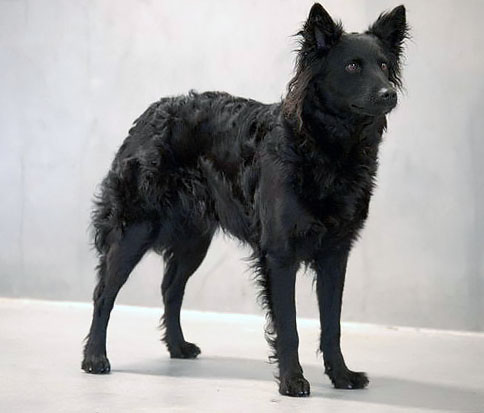
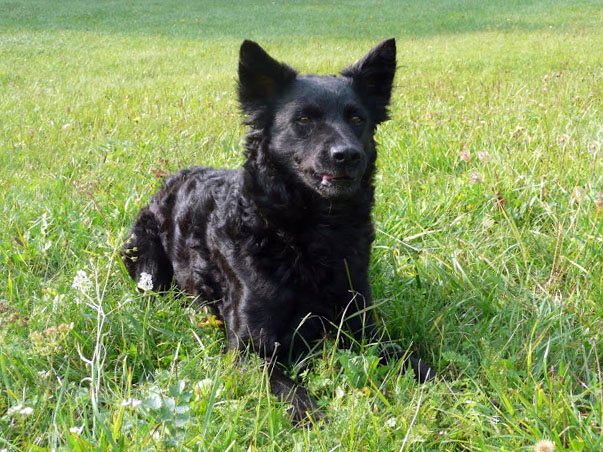
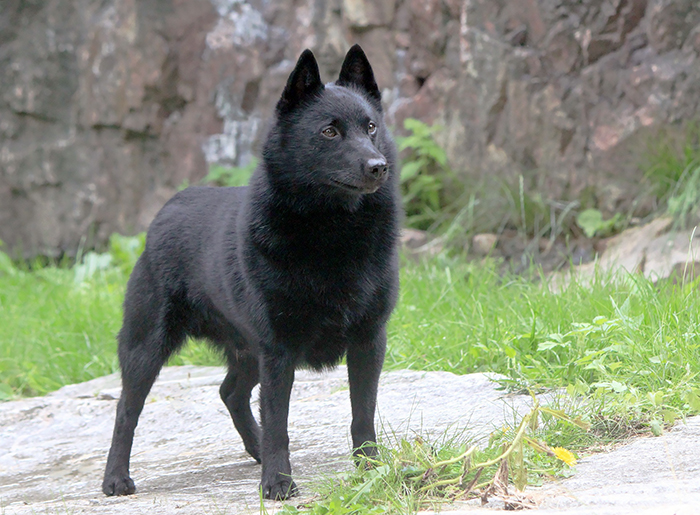
The Croatian Sheepdog is characterised by a predominantly black coat. According to the provided standard, the hair on the back is approximately 7 to 14 cm long and should be relatively soft and range from wavy to curly without becoming woolly.
The undercoat should be dense. The face is always short-haired, while longer hair appears on parts of the legs and other areas of the body.
A small number of white hairs may be tolerated. Small white markings on the throat and forechest are also permissible according to the standard, while white markings on the head, body or tail are not permitted within the described breed standard.
How much grooming does a Croatian Sheepdog need?
The provided breed standard describes the coat structure but does not specify a grooming schedule. Because the coat is medium-long, wavy to curly and accompanied by a dense undercoat, regular coat checks are advisable.
Brushing can help remove loose undercoat, debris and developing tangles. Particular attention may be necessary in areas with longer feathering.
Routine care should also include checking the ears, maintaining appropriate nail length and providing regular dental care.
Does the Croatian Sheepdog shed?
The breed has a dense undercoat, so owners should expect some shedding. The provided standard does not specify the typical amount or seasonal pattern of hair loss.
Regular grooming can help remove loose hair and maintain the condition of the coat, particularly during periods of increased shedding.
What should a Croatian Sheepdog eat?
The provided breed standard does not give specific feeding recommendations. A Croatian Sheepdog should receive a complete and balanced diet appropriate to its age, body size, health and activity level.
An actively working or sporting dog may have different energy requirements from a less active household companion. Feeding amounts should therefore be adjusted according to individual body condition and workload.
Maintaining a lean, athletic body condition is particularly important for an active breed.
What health problems are common in Croatian Sheepdogs?
The provided breed standard does not list specific hereditary diseases or common medical conditions associated with the Croatian Sheepdog. It would therefore be inappropriate to present particular diseases as established breed problems based solely on the source material.
Prospective owners should ask breeders about health screening performed on breeding dogs and about any known health conditions occurring within their lines.
Regardless of breed, regular veterinary examinations, preventive healthcare, appropriate nutrition and maintaining a healthy body condition remain important throughout a dog’s life.
Who is a Croatian Sheepdog suitable for?
The Croatian Sheepdog is particularly suitable for active people who enjoy training and interacting with their dog. Its traditional herding background and suitability for dog sports make it especially interesting for owners looking for an intelligent and versatile companion.
The ideal owner is willing to provide regular physical activity, mental challenges and consistent training rather than expecting the dog to entertain itself.
The breed may also appeal to people looking for an attentive watchdog that can simultaneously live as a household companion.
Who should not get a Croatian Sheepdog?
A Croatian Sheepdog may not be the best choice for someone seeking a very calm, low-energy dog that requires little training or daily activity.
Its intelligence, herding background and watchdog qualities can become challenging when the dog receives insufficient stimulation or guidance.
People who have very little time for exercise, training and interaction should carefully consider whether they can meet the needs of an active working breed.
What are the main advantages and disadvantages of a Croatian Sheepdog?
The breed’s main strengths include intelligence, trainability, agility and a strong hereditary ability to work with livestock. The provided breed description also identifies the Croatian Sheepdog as a good watchdog and a lovable house pet.
These same working characteristics can create challenges for owners who want a less active dog. A Croatian Sheepdog needs meaningful engagement and may develop unwanted behaviours when physical and mental needs are consistently neglected.
Its alertness can also require appropriate training, particularly in environments where frequent noises and visitors are part of everyday life.
Is a Croatian Sheepdog the right dog for you?
The Croatian Sheepdog is an agile, intelligent and highly trainable breed with centuries of history as a livestock-working dog. Its strong hereditary herding instinct remains one of its defining characteristics, but the breed can also adapt to modern life as a companion and participate successfully in various dog sports.
For the right owner, this combination of intelligence, versatility and attentiveness can be highly rewarding. However, the Croatian Sheepdog should not be viewed simply as a medium-sized pet that will automatically remain satisfied with minimal activity.
Prospective owners should be prepared to provide regular exercise, training and mental stimulation. Natural herding and watchdog behaviours should be guided through appropriate socialisation and clear, consistent training.
Several practical questions, including precise life expectancy, breed-specific health risks and typical behaviour towards children or other pets, are not addressed by the provided breed standard. These factors should therefore be discussed with experienced breeders, breed organisations and veterinary professionals when considering an individual dog.
For active owners who enjoy training and want a responsive, versatile and historically significant working breed, the Croatian Sheepdog can be a fascinating and rewarding companion.
“`
Frequently Asked Questions About Croatian Sheepdogs
How big does a Croatian Sheepdog get?
According to the breed standard, both males and females measure between 40 and 50 cm at the withers.
What is the temperament of a Croatian Sheepdog?
The breed standard describes the Croatian Sheepdog as lithe, keen and modest. It is considered easy to train and possesses strong hereditary herding instincts.
Is the Croatian Sheepdog a good family dog?
The breed description identifies it as a lovable house pet. Its active working background means it is best suited to families able to provide sufficient exercise, training and mental stimulation.
Does the Croatian Sheepdog have a strong herding instinct?
Yes. A strong hereditary instinct for herding different types of livestock is one of the breed’s defining characteristics.
Is the Croatian Sheepdog easy to train?
Yes. The breed standard specifically describes the Croatian Sheepdog as a dog that can be easily trained.
Is the Croatian Sheepdog a good watchdog?
Yes. The provided breed description specifically identifies the Croatian Sheepdog as a very good watchdog.
How much exercise does a Croatian Sheepdog need?
The breed standard does not specify an exact amount, but its working background and suitability for dog sports indicate a need for regular physical activity and mental stimulation.
Can a Croatian Sheepdog live in an apartment?
Apartment living can be possible if the dog’s exercise, training and mental stimulation needs are consistently met.
Can a Croatian Sheepdog live without herding livestock?
Yes. Dog sports, training, scent work and other structured activities can provide alternative physical and mental challenges.
What colour is a Croatian Sheepdog?
The breed’s basic coat colour is black. The standard permits only limited white markings in specific areas.
Does the Croatian Sheepdog shed?
The breed has a dense undercoat, so some shedding should be expected, although the provided breed standard does not specify the typical amount.
What health problems are common in Croatian Sheepdogs?
The provided breed standard does not identify specific common hereditary diseases. Prospective owners should ask breeders about health testing and conditions occurring within their breeding lines.
Is a Croatian Sheepdog suitable for first-time owners?
A committed first-time owner may be able to manage the breed successfully, but should be prepared for its activity level, intelligence, herding instincts and need for consistent training.
“`
Croatian Sheepdog pictures ➜
Origin: Republic of Croatia
Utilization: This breed possesses an excellent hereditary instinct for herding all kind of livestock but also he could be easily trained for all kind of dog sports. He is very good watchdog, loveable house pet.
Brief Historical Summary:According to written documents, the appearance of this breed has not changed greatly from the 14th century to the present day. Probably because it possesses an excellent hereditary instinct for working sheep and cattle, selection on the basis of usability was being carried out spontaneously, which has resulted also in the balance of its look.
The earliest written document about Croatian Sheepdogs, named “Canis pastoralis croaticus”, found in the archives of diocese of Djakovo by “father of the breed” – veterinarian Prof Dr Stjepan Romic – is from 1374. In this document, Petar, Bishop of Djakovo, says “the dog is about 18 inches high, with medium long black curly coat, the hair on the head is short, ears are pricked or semi-pricked and it is very good for keeping flocks of all farm animals.” He also mentions that the Croats brought the dog with them while migrating from their original native land to Croatia in the 7th century.
Romic also found in archive of Djakovo’s diocese important information from Years 1719, 1737, 1742 and 1752. In all of these documents the description of the Croatian Sheepdog matches entirely its appearance today and in all of them the dog is named Canis pastoralis croaticus or Croatian Sheepdog.
A systematic selection breeding programme was started by the same Prof Romic in 1935 with dogs in the territory of Djakovo. After 34 years of work, breed was finally also recognised by FCI in 1969.
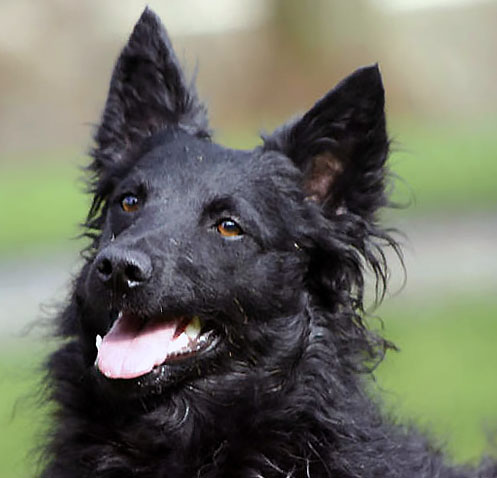
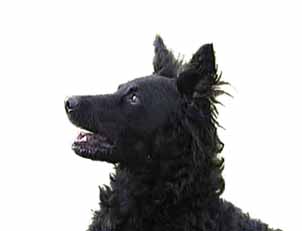 General Appearance: Croatian Sheepdog is of lower medium height. Its base color is black. Short hairs on the head and legs characterize the breed.
Important Measurements / Proportions:
The body length exceeds the height at the withers for approximately 10%, so the dog is of somewhat elongated square shape.
Behaviour/Temperament: It is a lithe, keen and modest shepherd’s dog, which can easily be trained.
HEAD
CRANIAL REGION:
Generally: The head is relatively light, lean and wedge shaped. The ratio between the muzzle and the skull is 9:11. The total length of the head is about 20 cm.
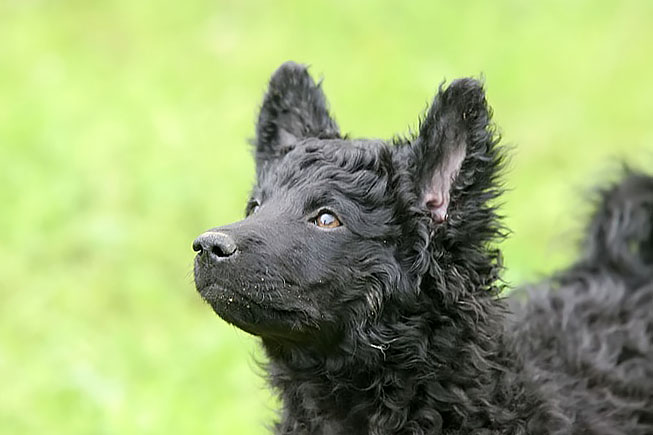
Skull: Slightly rounded skull tapering towards the nose. The eyebrow arches are not pronounced. The cheeks are rounded. The occiput can be distinct.
Stop: slightly pronounced.
FACIAL REGION:
Nose: Always black and in the line with the nose ridge.
Muzzle: Lean, nose ridge looking from the profile is straight and is a wedge-shaped extension of the skull. The lower jaw is well developed and forms a harmonious whole with line of the nose ridge. The muzzle is neither pointed nor square.
Teeth: Good developed, complete scissors bite. Level bite is acceptable but not desirable.
Lips: Dry, close fitting and supple. The visible lip pigment is black. Corner of the mouth is tight.
Eyes: Chestnut brown to black, medium in size, almond-shaped, they give lively expression to the dog, set horizontally. The rims of the eyelids are dark pigmented and tight, fit close to the eyeballs.
Ears: Triangular in shape, medium-sized, erect or semi-erect, somewhat set to the side. Erect ears are more desirable. Ear cropping is not allowed.
NECK: Slightly rises above the back line, the upper and lower lines of the neck are straight. Moderately long, it is of medium strength, deep and well rounded, muscular. The skin is without dewlap and is covered with a dense coat.
BODY
Withers: Not pronounced. The transition to the neck is gradual.
Back: Straight, short and muscular.
Loin: Short and firmly coupled.
Chest: Medium long, broad and deep enough. Ribs sprung, forechest slightly pronounced. The transition to the neck is in a straight line.
Belly: Slightly tucked-up. The loins are full and sturdy.
Croup: Medium long, slightly sloping down, muscular and fairly broad.
TAIL: Set medium high, with thick and long hairs, in repose hangs relaxed or is carried at back level. In attention it is carried above the back line. There are dogs born without or with short tail, or the tail is docked so that in an adult male it is about 4 cm long.
LIMBS
FOREQUARTERS: The legs are straight, parallel looking from front and of medium length. Angulation of the front legs is more opened, the dog stands steeper. Shoulder blades are medium long
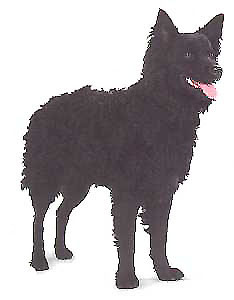
and muscular, somewhat set steeper. The upper arm is relatively short. The forearm is long and muscular. Bones are lighter.
Pasterns dry, indistinct, short and not completely vertical. The feet are small, strong, semi-rabbit-like. The toes are well knitted, well and firmly cushioned. The nails are black or gray.
HINDQUARTERS: The hind legs are medium-angulated. From behind, the legs are parallel. The lower thigh is long and the hock is set lower. The upper thigh is of medium width, well muscled. The hocks are dry and distinct, well angulated.
Hind feet are the same as the front ones, small and sturdy though somewhat elongated. Dewclaws are removed.
GAIT/MOVEMENT: The Croatian Sheepdog moves in briskly trot with moderately long steps.
COAT
TEXTURE: The length of hair on the back is between 7 and 14 cm. The foreface is always shorthaired. The ears are shorthaired on the outside and longhaired on the inside. The backside of the forelegs has longer hairs down to pastern and forms feathering. The hind legs have pronounced feathering from the buttocks to the hocks. The coat is relatively soft, wavy to curly, but mustn’t be woolly. The undercoat must be dense.
COLOR: The base color of the coat is black. A few white hairs can be tolerated. White markings on the head, body and tail aren’t permissible, but small white markings are permissible on the throat and the forechest. White markings on the toes or the legs are permissible but undesirable. White legs up to pasterns lower the dog’s marks on shows.
HEIGHT: Height at withers in males and females is between 40 to 50 cm.
FAULTS: Any departure from the foregoing points must be considered a fault and the seriousness with which the fault should be regarded should be in exact proportion to its degree.
- Any other color of the nose than black;
- Two or more first premolars (PM1) missing;
- Over – or undershot jaws;
- Yellow or albino eyes;
- Drooping ears;
- Completely woolly or too long coat;
- Longer hairs on foreface;
- White markings on head, body or tail;
- Height at the withers below or over the one in Standard.
NB: Male animals must have two apparently normal testicles fully descended into the scrotum.
Photos and pictures of Croatian Sheepdog: