Saint Bernard Dog
Saint Bernard: Temperament, Care, Health and Everyday Life
The Saint Bernard is one of the world’s most recognisable giant dog breeds. Famous for its history as a rescue dog in the Swiss Alps, this powerful yet generally gentle breed is today primarily kept as a companion and family dog. However, living with a Saint Bernard requires careful consideration. Its enormous size affects almost every aspect of ownership, from feeding and training to transport, grooming and veterinary care.
How big does a Saint Bernard get?
The Saint Bernard is a giant breed. According to the breed standard, males should be at least 70 cm tall at the withers, while females should measure at least 65 cm. Males may reach 90 cm and females 80 cm, although larger dogs can also occur if they remain well proportioned and move correctly.
Adult body weight can vary considerably depending on sex, height and build. Many adult Saint Bernards weigh approximately 55 to 90 kg, with particularly large males sometimes weighing even more. A healthy body condition is more important than achieving a specific weight. Excess weight places additional strain on the joints and cardiovascular system and should therefore be avoided.
Potential owners should consider the practical consequences of owning such a large dog. A Saint Bernard needs a large bed, appropriately sized equipment and enough room to move comfortably around the home. Transporting an adult dog also requires sufficient space in the car.
How long do Saint Bernards live?
As with many giant dog breeds, the Saint Bernard generally has a shorter life expectancy than smaller dogs. Many live for approximately 8 to 10 years, although individual lifespan varies according to genetics, health, body condition, nutrition and veterinary care.
Choosing a responsible breeder who performs appropriate health testing can help reduce the risk of certain inherited health problems. Maintaining a healthy weight and providing suitable exercise throughout the dog’s life are also important.
What is the temperament of a Saint Bernard?
Saint Bernards are generally known for their friendly, patient and calm nature. They often form strong bonds with their families and enjoy being involved in everyday family life. Despite their impressive appearance, well-socialised Saint Bernards are usually not unnecessarily aggressive.
Individual temperament can nevertheless vary. Some dogs are very relaxed, while others are more energetic and playful. The breed is naturally watchful, and the sheer size and deep bark of an adult Saint Bernard may be enough to discourage unwanted visitors.
Saint Bernards should not be expected to behave like highly driven working breeds. They can sometimes appear independent or stubborn, particularly if training is inconsistent. Early education and clear rules are therefore essential.
Are Saint Bernards good family dogs?
A well-bred and properly socialised Saint Bernard can make an excellent family companion. These dogs often enjoy close contact with their owners and usually prefer living as part of the household rather than being isolated outdoors.
Their calm nature can suit families that want a large but generally relaxed companion. However, prospective owners should be realistic about the practical demands of the breed. A Saint Bernard takes up considerable space, produces large amounts of hair and often drools. Food and veterinary costs can also be significantly higher than for a smaller dog.
Are Saint Bernards good with children?
Saint Bernards are often described as patient and affectionate with children, and many live successfully in families. Nevertheless, interactions between dogs and young children should always be supervised.
The main concern is not necessarily temperament but size. An enthusiastic Saint Bernard weighing 70 kg or more can accidentally knock over a small child simply by turning around, leaning against them or playing.
Children should also learn how to interact respectfully with dogs. They should not disturb a dog while it is eating or sleeping, climb on it or treat it as a toy. A dog should always have a quiet place where it can retreat undisturbed.
Do Saint Bernards get along with other dogs and pets?
Many Saint Bernards can live peacefully with other dogs and household animals, particularly when they have been socialised from an early age. Individual personality and previous experiences nevertheless play an important role.
Careful introductions are advisable when bringing an adult Saint Bernard into a household with existing pets. Because of the breed’s size, even friendly play can be intimidating for much smaller dogs.
Saint Bernards raised with cats often learn to live with them successfully. Early exposure to different animals, people and environments can help a puppy develop into a confident and socially appropriate adult.
Are Saint Bernards easy to train?
Saint Bernards are capable of learning well, but training should begin early. A small puppy may be easy to control physically, but an untrained adult Saint Bernard can become extremely difficult to manage.
Basic skills such as walking calmly on a lead, coming when called, waiting at doors and greeting people without jumping are especially important.
Positive, reward-based training with clear and consistent rules is generally the best approach. Training sessions should be engaging and appropriate to the individual dog. Harsh methods are unnecessary and can damage trust.
Early socialisation is equally important. Puppies should gradually and positively experience different people, environments, surfaces, sounds and everyday situations without being overwhelmed.
Is a Saint Bernard suitable for first-time dog owners?
A Saint Bernard can live successfully with a committed first-time owner, but it is not necessarily one of the easiest breeds for beginners.
Its size leaves little room for training mistakes. Behaviours that may be mildly inconvenient in a small dog can become serious problems in a dog weighing more than an adult person. Pulling on the lead, jumping at visitors or refusing to move can be difficult to manage.
First-time owners should be prepared to invest considerable time in training and socialisation. Attending a good puppy class or working with a qualified dog trainer can be particularly valuable.
How much exercise does a Saint Bernard need?
Despite its history as a mountain dog, the modern Saint Bernard generally does not require extreme amounts of exercise. Most adult dogs benefit from regular daily walks combined with opportunities to explore, sniff and engage mentally with their environment.
The exact amount depends on age, health and individual temperament. Rather than intense repetitive exercise, many Saint Bernards are better suited to moderate, consistent activity.
Exercise requires particular care during puppyhood. Giant-breed puppies grow rapidly, and excessive jumping, repetitive running and other high-impact activities may place unnecessary stress on developing joints. Exercise should be adapted to the puppy’s stage of development.
Adult Saint Bernards may enjoy longer walks and suitable hikes when physically conditioned, but they are generally not ideal partners for intensive endurance running.
Can a Saint Bernard live in an apartment?
It is possible for a Saint Bernard to live in a sufficiently spacious apartment, provided its exercise and other needs are met. A large garden is useful but does not replace regular walks, training and interaction with the owner.
Practical considerations are particularly important. The dog needs enough room to move and rest comfortably. Slippery floors can be problematic for large dogs and may require rugs or other non-slip surfaces.
Stairs can also become a significant issue. Carrying an adult Saint Bernard is generally impossible for most people. Owners living in buildings without lifts should consider how they would manage if the dog became temporarily unable to use stairs because of illness, injury or old age.
Can Saint Bernards tolerate hot weather?
Saint Bernards are better adapted to cool conditions than to high temperatures. Their large body mass and dense coat can make them vulnerable to overheating.
During warm weather, exercise should be moved to the cooler parts of the day. Dogs should always have access to fresh water and a cool, shaded place to rest. Strenuous exercise in high temperatures should be avoided.
Owners should know the warning signs of heat-related illness, including excessive panting, weakness, confusion and collapse. Suspected heatstroke is an emergency requiring immediate veterinary attention.
How much grooming does a Saint Bernard need?
Both coat varieties require regular grooming. The short-haired Saint Bernard has a dense, close-fitting outer coat with a substantial undercoat, while the long-haired variety has a medium-length coat with feathering.
Brushing several times per week helps remove loose hair and prevent the coat from becoming excessively dirty or tangled. During seasonal shedding periods, more frequent grooming may be necessary.
Long-haired dogs require additional attention to areas where tangles can develop, including behind the ears and around the feathering.
Nails should be checked regularly, and ears should be monitored for signs of irritation or infection. Dental care should also form part of the dog’s regular routine.
Do Saint Bernards shed a lot?
Yes. Saint Bernards are generally heavy shedders because both coat varieties have a substantial undercoat. Owners should expect dog hair in the home throughout the year, with heavier shedding at certain times.
Regular brushing can reduce the amount of loose hair but will not eliminate shedding completely. Anyone considering the breed should be comfortable with frequent cleaning.
Do Saint Bernards drool?
Many Saint Bernards drool considerably. Their facial anatomy and loose lips make saliva around the mouth common, particularly after eating, drinking or exercise.
The amount varies between individuals, but prospective owners should assume that some drooling will be part of everyday life. Keeping towels available in commonly used areas can make management easier.
What should a Saint Bernard eat?
A Saint Bernard should receive a complete and balanced diet appropriate to its age, size, activity level and health. Because obesity places additional pressure on the joints, portions should be controlled and body condition monitored regularly.
Nutrition is particularly important during puppyhood. Giant-breed puppies require controlled growth rather than the fastest possible weight gain. A diet specifically formulated for the growth of large or giant breeds can help provide an appropriate nutritional balance.
Owners should discuss individual feeding requirements with a veterinarian, particularly if the dog has health problems or unusual nutritional needs.
Because large, deep-chested dogs can be at risk of gastric dilatation-volvulus, commonly known as bloat or gastric torsion, owners should also discuss individual risk factors and preventive measures with their veterinarian.
What health problems are common in Saint Bernards?
Like many giant breeds, Saint Bernards can be predisposed to several health conditions. Potential concerns include hip and elbow dysplasia, certain eye disorders, heart disease and orthopaedic problems.
Gastric dilatation-volvulus is another important risk in large, deep-chested dogs. The condition can progress rapidly and is a veterinary emergency.
Because health risks vary between individual dogs and breeding lines, responsible breeding is important. Prospective puppy buyers should ask breeders which health examinations are performed on breeding dogs and request documentation of relevant test results.
Owners should also watch for changes in movement, appetite, breathing or behaviour and seek veterinary advice when something appears abnormal.
How expensive is it to own a Saint Bernard?
The Saint Bernard can be considerably more expensive to keep than an average-sized dog. Food costs are higher, and many products must be purchased in extra-large sizes.
Veterinary expenses can also be significant. Medication doses may depend on body weight, and diagnostic procedures, anaesthesia and surgery for giant dogs can sometimes be more complicated or costly.
Owners should also budget for training, insurance where applicable, grooming equipment, a large bed, collars or harnesses, transport equipment and possible emergency veterinary care.
The purchase price of a puppy is therefore only one part of the total financial commitment.
Who is a Saint Bernard suitable for?
A Saint Bernard may be a good choice for people who want a large, affectionate and generally calm companion and who have enough time, space and financial resources to meet the breed’s needs.
The ideal owner is prepared to train the dog consistently from puppyhood, provide regular but moderate exercise and accept practical realities such as shedding, drooling and the difficulty of transporting a giant dog.
The breed can suit families and may live successfully with children and other pets when properly socialised and supervised.
Who should not get a Saint Bernard?
The breed may not be suitable for people who want a highly athletic running companion, a dog that is easy to transport or a low-maintenance pet.
People who are uncomfortable with heavy shedding or drooling should also consider another breed. The same applies to owners who cannot physically or financially manage a giant dog.
Living conditions should be considered carefully. Numerous stairs, very limited indoor space and consistently hot environments can make everyday life more difficult for a Saint Bernard.
What are the main advantages and disadvantages of a Saint Bernard?
The Saint Bernard’s greatest strengths are typically its friendly character, close attachment to its family and relatively calm nature. Its impressive appearance and watchfulness can also provide a natural sense of security without the dog necessarily being aggressive.
The disadvantages are largely connected to its enormous size. Saint Bernards require considerable space, produce substantial amounts of hair and often drool. Feeding and veterinary care can be expensive, and health problems associated with giant breeds must be taken seriously.
Their relatively short average lifespan is another factor that prospective owners should consider.
Is a Saint Bernard the right dog for you?
The Saint Bernard is much more than the legendary Alpine rescue dog portrayed in popular culture. It is a powerful giant breed that can also be a gentle and devoted family companion.
For the right household, its calm temperament and affectionate personality can make it an exceptional companion. However, choosing a Saint Bernard should never be based on appearance alone.
Future owners should realistically consider whether they can provide enough space, appropriate training, regular grooming, suitable exercise and the financial resources required throughout the dog’s life. They must also be comfortable living with shedding, drooling and all the practical challenges associated with a dog of exceptional size.
Anyone prepared for these responsibilities may find the Saint Bernard a loyal, impressive and deeply rewarding companion.
“`
Frequently Asked Questions About Saint Bernards
How big does a Saint Bernard get?
Adult males are at least 70 cm tall at the withers and females at least 65 cm. Many adults weigh approximately 55 to 90 kg, although individual size varies considerably.
How long does a Saint Bernard live?
Many Saint Bernards live approximately 8 to 10 years, although individual lifespan depends on factors including genetics, health and lifestyle.
Are Saint Bernards good with children?
They can be excellent family dogs and are often patient with children. Because of their enormous size, interactions with young children should always be supervised.
Do Saint Bernards need a lot of exercise?
They generally need regular moderate exercise rather than intensive athletic activity. Exercise should be carefully managed while puppies are growing.
Can a Saint Bernard live in an apartment?
Yes, provided the apartment offers sufficient space and the dog receives appropriate daily exercise. Stairs and access should be considered carefully.
Are Saint Bernards easy to train?
They can learn well, but early and consistent training is essential because an untrained adult is extremely powerful and difficult to control physically.
Do Saint Bernards shed?
Yes. Both short-haired and long-haired Saint Bernards shed considerably and require regular brushing.
Do Saint Bernards drool a lot?
Many do. Drooling is a normal feature of the breed and should be expected by prospective owners.
Can Saint Bernards tolerate hot weather?
They are better suited to cooler climates and can be vulnerable to overheating. Exercise should be limited during hot weather.
Are Saint Bernards suitable for first-time owners?
They can be, provided the owner is committed to early training and understands the practical and financial demands of owning a giant breed.
“`
ORIGIN: Switzerland
UTILISATION: Companion-, watch and farm dog.
BRIEF HISTORICAL SURVEY: At the height of the Great St. Bernard Pass, 2469m (8100ft.) above sea level, a hospice was founded by monks in the 11th century as a refuge for travellers and pilgrims, and large mountain dogs have been kept there for watch and protection since the middle of the 17th century. The existence of such dogs has been documented in paintings and drawings dating back to 1695 and in written official documents of the Hospice since 1707.
These dogs were soon in service as companion dogs for the monks, being especially deployed as rescue dogs for travellers lost in snow and fog. Numerous chronicles, published in many languages, as well as verbal reports by the soldiers of Napoleon who transited the Great Pass with him in 1800, tell of many lives saved by these dogs in the face of “the White Death”. The fame of the St.Bernard, then known as the “Barry-dog”, spread throughout Europe in the 19th century, and the legendary dog “Barry” became the epitome of the rescue dog.
The direct ancestors of the St.Bernard were the large farm dogs which were widely spread across the region, and within a few generations after the establishment of the ideal type, they were bred into the present day breed. Heinrich Schumacher, from Holligen near Berne, Switzerland, was the first to document and provide pedigrees for his dogs. In February 1884 the “Schweizerische Hundestammbuch der SKG”(SHSB), the Swiss SKG/FCI Dog Stud Book, was opened. The very first entry was the St. Bernard “Léon”, and the following 28 entries were also all St. Bernards. The Swiss St. Bernard Club was founded in Basle on March 15th 1884. During the International Canine Congress of June 2nd 1887, the St. Bernard was officially recognised as a Swiss breed and the breed standard was declared as binding. Since that time the St. Bernard has been a Swiss national dog.
GENERAL APPEARANCE:
There are two varieties of the St. Bernard:
– Short-hair variety (Stockhaar, smooth coat)
– Long-hair variety (rough coat)
Both varieties are of notable size and have a balanced, sturdy, muscular body with imposing head and alert facial expression.
BEHAVIOUR-TEMPERAMENT: Friendly by nature. Temperament calm to lively, watchful.
IMPORTANT PROPORTIONS: Ideal proportion for height at withers to body length (measured from the point of the shoulder to the point of the ischium) = 5:6.
For the ideal relationship of height at withers to depth of chest see the following sketch.
HEAD
General: Massive and imposing
CRANIAL REGION: Skull strong, broad, seen in profile and from the front slightly rounded; sideways it merges gently rounded into the strongly developed high cheek bones, falling away steeply towards the muzzle. Occipital bone only moderately pronounced. Supraorbital ridges strongly developed. The frontal furrow, which starts as the root of the muzzle and runs over the whole skull, disappears towards the base of the occiput. The skin of the forehead forms wrinkles over the eyes which converge towards the frontal furrow. When the dog is attentive, the wrinkles become more pronounced. When alert, the set-on of the ear and the topline of the skull appear in a straight line.
Stop: Markedly pronounced.
FACIAL REGION:
Muzzle: Short, does not taper. Nasal bridge straight, with a shallow furrow running its length. Length of muzzle shorter than its depth, measured at the root of the muzzle.
Nose: Black, broad and square. Nostrils well opened.
Lips: Edge of lips black. Flews of upper jaw strongly developed, pendulous, forming a wide curve towards the nose. Corner of mouth remains visible.
Teeth: Strong, regular and complete scissor or even bite. Reverse scissor bite acceptable. Missing PM 1 (premolar 1) tolerated.
Eyes: Medium size. Colour dark brown to lighter nut-brown. Not too deeply set, with a friendly expression. Eyelids as close fitting as possible. Complete pigmentation on eye rims. Natural tightness of lids desired. A small angular wrinkle of the lower eyelid with inconspicuous showing of the conjunctiva, as well as a small angular wrinkle of the upper eye lid are allowed.
Ears: Medium size, set on high and wide. Strongly developed burr at the base. Ear flaps pliable, triangular with the tip rounded off. The back edge stands off slightly, the front edge lies close fitting to the cheeks.
NECK: Strong, dewlap not too exaggerated.
BODY
General: General appearance imposing and balanced.
Topline: Withers well defined. Straight from withers to loin. Rump falls away gently and merges with root of tail.
Back: Broad, strong and firm.
Chest: Brisket moderately deep with well sprung ribs, but not reaching beyond the elbows.
Belly and lower line: Slight tuck-up towards rear.
Tail: Set on broad and strong. Tail long and heavy, its last vertebra reaching at least to the hocks. When in repose, the tail hangs straight down or may turn gently upward in the lower third. When animated, it is carried higher.
LIMBS
FOREQUARTERS:
General: Stance rather broad, straight and parallel when seen from front.
Shoulders: Muscular, shoulder-blade oblique, well attached to the chest wall.
Upper arm: The same length or only slightly shorter than the shoulder-blade. Angle between shoulder blade and upper arm not too straight.
Elbow: Laying well onto the body.
Forearm: Straight, heavy boned, tautly muscled.
Pasterns: Vertically straight when seen from front and at a light angle when seen from the side.
Forefeet: Broad, compact, with strong, well arched toes.
HINDQUARTERS:
General: Hindquarters muscular with moderate angulation. Seen from rear, the hind legs are parallel and not too close together.
Upper thigh: Strong, muscular with broad buttocks.
Stifle: Well angulated, turning neither in nor out.
Lower thigh: Slanting and rather long.
Hock joints: Slightly angulated and firm.
Hock: Straight and parallel when seen from behind.
Hind feet: Broad, compact, with strong well arched toes. Dewclaws tolerated as long as they do not hinder movement.
GAIT: Co-ordinated, smooth reaching strides with good drive from the hindquarters. Hindquarters track in line with the forequarters.
COAT
HAIR:
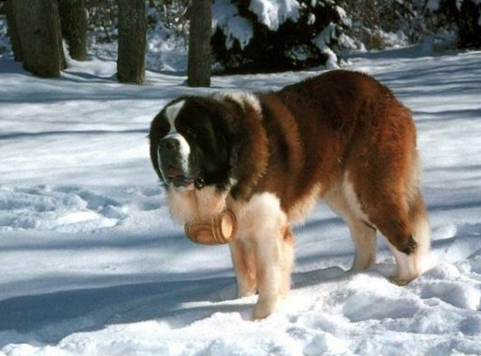
Short-hair variety (Stockhaar, smooth coat): Top coat dense, smooth, close lying and coarse, with rich undercoat. Buttocks lightly breached. Tail covered with dense fur.
Long-hair variety (rough coat): Top coat plain, of medium length with a rich undercoat. Over the haunches and rump usually somewhat wavy. Front legs feathered. Buttocks well breached. Short hair on face and ears. Bushy tail.
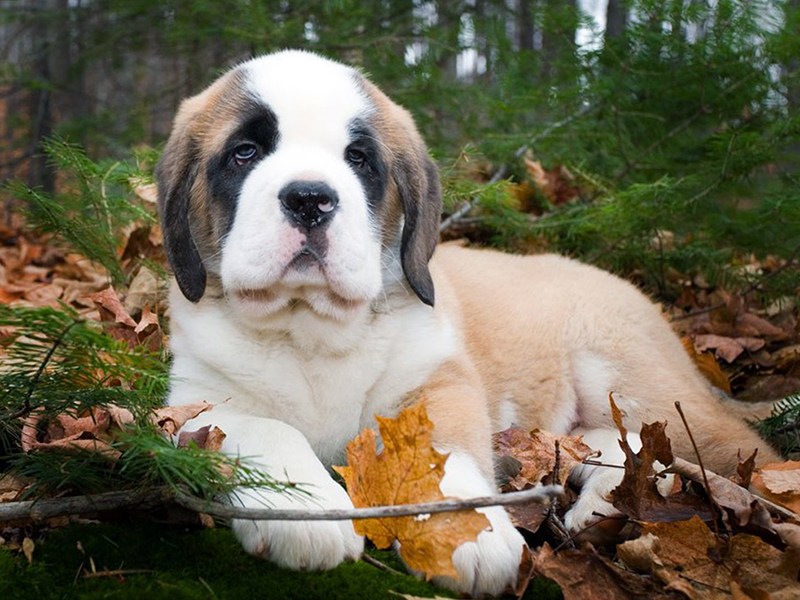
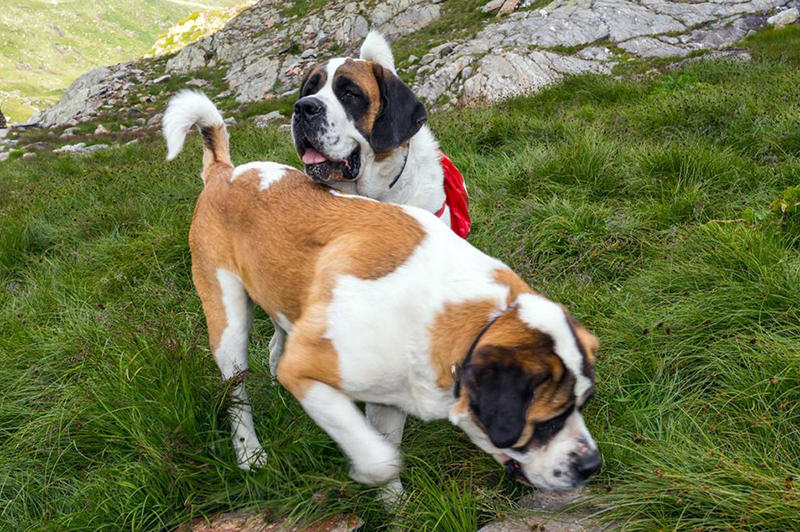
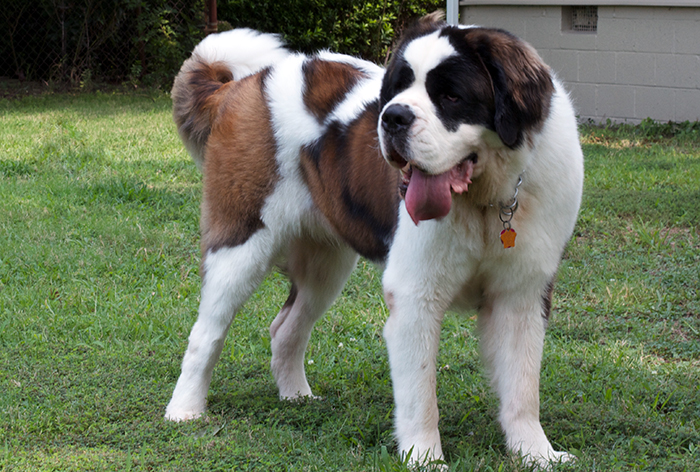
COLOUR: Basic colour white with either small or large reddish-brown splashes (“splash coat”) or a continuous reddish-brown blanket covering back and flanks (“mantle coat”). A torn reddish-brown mantle (broken up by white) is of equal value. Reddish-brown brindle permissible. Brownish-yellow tolerated. Dark brown shadings on head desirable. Slight black shadings on body tolerated.
Markings: Chest, feet, tip of tail, muzzle band, blaze and patch on neck must be white.
Desirable: White collar.
Symmetrical dark mask.
SIZE: Minimal height: dogs 70 cm (27.56 in)
bitches 65 cm (25.59 in)
Maximum height: dogs 90 cm (35.43 in)
bitches 80 cm (31.5 in)
Dogs which exceed the maximum height will not be penalised, provided their general appearance is balanced and their movement correct.
FAULTS: Every departure from the foregoing points should be considered a fault which will be assessed according to the degree of departure from the standard.
– Lack of correct gender characteristics
– Unbalanced general appearance
– Strong wrinkles on head, excessive dewlap
– Muzzle too short or too long.
– Flews of the lower jaw turning outward
– Under- or overshot bite
– Missing teeth other than PM 1 (premolar 1)
– Low set on ears
– Light eyes
– Entropion, ectropion
– Eyelids too loose
– Sway back or roach back
– Rump higher than withers or falling away steeply
– Tail carried curled over back
– Crooked or severely turned out front legs.
– Poorly angulated, bowed or cow-hocked hindquarters
– Faulty movement
– Curly coat
– Incomplete or totally absent pigment on nose, around the nose, on lips and eyelids
– Faulty markings, e.g. white with reddish-brown ticks
– Faults of temperament: aggressiveness, shyness
DISQUALIFYING FAULTS:
– Coat totally white or totally reddish-brown
– Coat of a different colour
– Wall eye, blue eye.
N.B.: Male animals should have two apparently normally developed testicles fully descended into the scrotum.
Photos and pictures of St. Bernard dog: