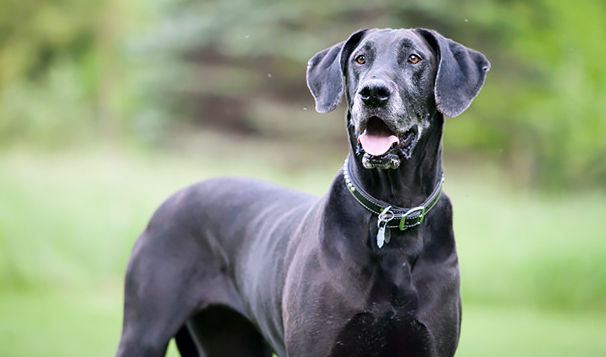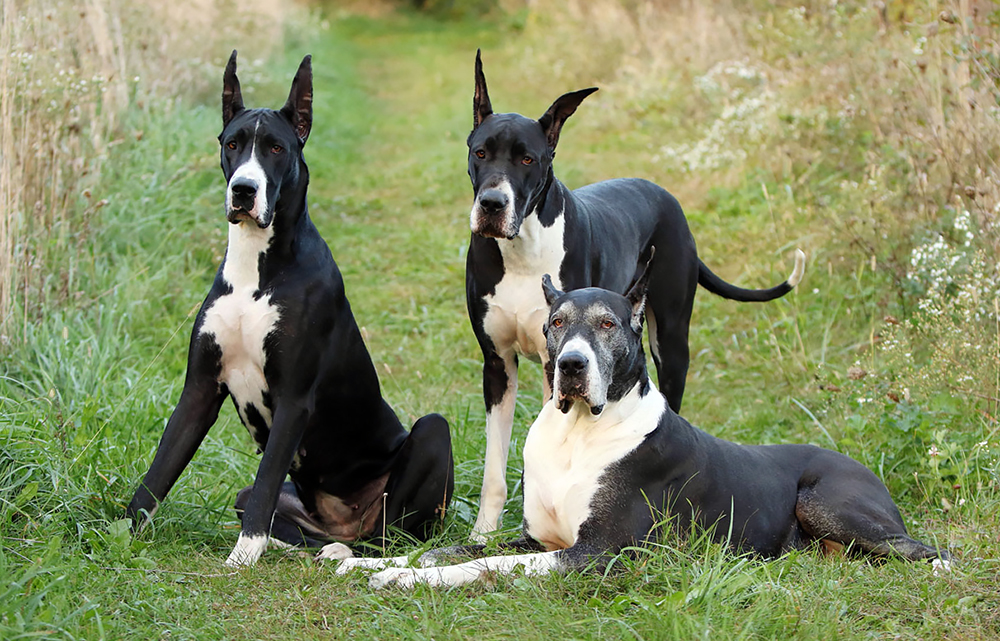
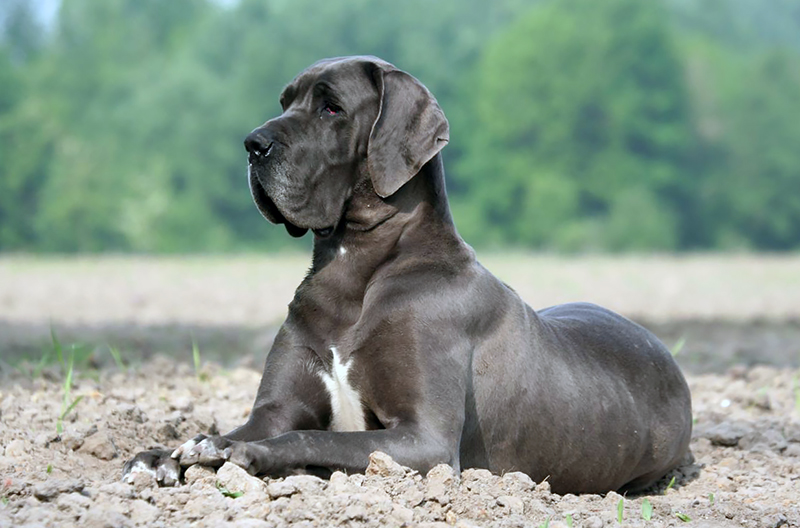
Great Dane
Great Dane: Temperament, Care, Health and Everyday Life
The Great Dane is one of the largest and most immediately recognisable dog breeds in the world. Despite its imposing size and historical role as a hunting, watch and guard dog, the modern Great Dane is primarily valued as a companion and family dog. The breed is known for combining an impressive physical presence with a generally friendly, affectionate and people-oriented temperament.
However, living with a Great Dane requires considerably more planning than living with an average-sized dog. Space, training, transport, feeding and veterinary care all take on a different dimension when a dog can weigh as much as an adult person. Prospective owners should also understand the health considerations associated with giant breeds before deciding whether a Great Dane is the right companion for them.
How big does a Great Dane get?
The Great Dane is a giant dog breed. According to the breed standard, adult males should measure at least 80 cm at the withers, while females should be at least 72 cm tall. Many individuals are considerably taller.
Weight varies depending on sex, height, build and body condition. Adult Great Danes commonly weigh approximately 45 to 80 kg, although particularly large males may weigh more. A healthy Great Dane should have a powerful but balanced and athletic appearance rather than carrying excessive body weight.
The practical consequences of this size should not be underestimated. A Great Dane requires a sufficiently large bed, appropriately sized collars or harnesses and enough room to move comfortably through the home. Owners also need a suitable vehicle if the dog will regularly travel by car.
Before getting a puppy, prospective owners should consider how they would manage an adult Great Dane that temporarily becomes unable to walk because of illness, injury or old age. Carrying a fully grown dog is impossible for most people.
How long do Great Danes live?
Great Danes generally have a shorter life expectancy than many smaller dog breeds. Many live approximately 7 to 10 years, although individual lifespan varies considerably.
Genetics, breeding practices, nutrition, body condition, preventive healthcare and the development of serious diseases can all influence longevity. Prospective owners should therefore ask breeders about the health and lifespan of related dogs rather than focusing exclusively on appearance.
Maintaining a healthy weight is particularly important. Excess body weight places additional stress on the joints and cardiovascular system and may make mobility increasingly difficult as the dog ages.
What is the temperament of a Great Dane?
Despite its enormous size, the typical Great Dane is generally friendly, affectionate, confident and strongly attached to its owners. Many Great Danes enjoy close physical contact with their families and may attempt to behave like much smaller dogs despite their size.
The breed standard describes the Great Dane as friendly, kind, devoted and particularly affectionate towards children. A stable adult should be self-assured, manageable and resistant to unnecessary provocation rather than nervous or aggressive.
Great Danes may initially be reserved towards unfamiliar people. However, a properly socialised dog should be able to cope calmly with normal visitors and everyday social situations.
Their physical presence alone can make them effective deterrents, even when the individual dog is friendly. Owners should therefore place particular importance on calm behaviour and reliable control in public.
Are Great Danes good family dogs?
A well-bred and properly socialised Great Dane can be an excellent family companion. Many are strongly people-oriented and prefer being close to their owners rather than spending long periods separated from household activities.
The breed can suit families looking for a large but generally calm companion. However, the practical requirements of a giant dog must be considered carefully. A Great Dane takes up substantial space, consumes more food than a smaller dog and may generate significantly higher veterinary costs.
Families should also be prepared for the relatively short lifespan associated with giant breeds. For many owners, this is one of the most difficult aspects of sharing their lives with a Great Dane.
Are Great Danes good with children?
Great Danes are often affectionate and patient with children and can form very close relationships with younger family members. However, their enormous size means that supervision remains essential, particularly around small children.
Even a gentle Great Dane can accidentally knock over a child simply by turning quickly, leaning against them or becoming excited during play. A wagging tail at the height of a child’s face can also be surprisingly powerful.
Children should be taught to interact respectfully with the dog. They should not climb on the dog, disturb it while eating or sleeping, or treat it as something to ride or wrestle with.
The dog should always have access to a quiet resting area where it can remain undisturbed.
Do Great Danes get along with other dogs?
Many Great Danes live successfully with other dogs and can be sociable when appropriately socialised from puppyhood. Individual temperament, previous experiences and the behaviour of the other dog all influence compatibility.
Because of the Great Dane’s size, play with much smaller dogs should be supervised. Even friendly physical interaction can accidentally cause injury when there is a substantial difference in body weight.
Early socialisation should focus on positive and controlled experiences with stable dogs rather than uncontrolled interaction with every dog the puppy encounters.
Can Great Danes live with cats and other pets?
Many Great Danes can live peacefully with cats, particularly when they are raised together or introduced carefully. However, individual prey drive varies, and compatibility should always be assessed on an individual basis.
Introductions should be gradual and controlled. Cats should have access to elevated areas or separate spaces where they can retreat from the dog.
Special care is necessary with very small pets. Even without aggressive intent, the size and strength of a Great Dane can make unsupervised interaction risky.
Are Great Danes easy to train?
Great Danes are generally intelligent and capable of learning well. Because of their exceptional adult size, however, early training is not optional. A behaviour that appears harmless in a small puppy can become extremely difficult to manage when the same dog weighs 60 or 70 kg.
Essential skills include walking calmly on a lead, coming when called, waiting at doors, remaining calm around visitors and greeting people without jumping.
Positive, reward-based training combined with clear and consistent boundaries generally works well. Training should begin from the moment the puppy arrives in its new home rather than waiting until the dog becomes physically difficult to control.
Owners should also teach cooperative handling so that the dog is comfortable having its paws, ears, mouth and body examined. This can make veterinary visits and routine care considerably easier.
Are Great Danes suitable for first-time dog owners?
A Great Dane can be suitable for a committed and well-prepared first-time dog owner, but the breed is not necessarily an easy choice for beginners.
The main challenge is size. Training mistakes that might be inconvenient with a small dog can become serious problems with a giant breed. Pulling on the lead, jumping on visitors or refusing to move can be extremely difficult to manage physically.
First-time owners should be willing to invest in early socialisation and structured training. Working with a qualified trainer who uses appropriate reward-based methods can be particularly valuable.
Can a Great Dane be left alone?
Great Danes are typically strongly attached to their families, and many prefer not to spend very long periods alone. Individual tolerance varies, and the ability to remain alone calmly should be taught gradually from puppyhood.
A puppy should not suddenly be expected to remain alone for an entire working day. Separation should be introduced in short, manageable periods and increased gradually.
An adult Great Dane that has been appropriately trained may be able to remain alone for reasonable periods, but the breed is generally not ideal for a lifestyle in which the dog routinely spends most of every day without human contact.
How much exercise does a Great Dane need?
Despite its enormous size, the Great Dane does not usually require extreme amounts of exercise. Healthy adults generally benefit from regular daily walks and opportunities to explore their environment.
Moderate, consistent exercise is generally preferable to repeated high-impact activity. Many adult Great Danes enjoy longer walks and suitable outdoor adventures but are not ideal partners for intensive endurance running.
Exercise requires particular care during puppyhood and adolescence. Great Danes grow rapidly, and their developing bones and joints should not be subjected to excessive repetitive jumping, forced running or other strenuous impact activities.
Exercise should be adapted to the individual dog’s age, physical development and health rather than following a rigid universal schedule.
Can a Great Dane live in an apartment?
Surprisingly, a Great Dane can adapt to apartment living if there is enough physical space and its exercise needs are consistently met. Many adult Great Danes are relatively calm indoors and spend a significant amount of time resting.
However, the apartment must be practically suitable for a giant dog. Narrow spaces, slippery floors and multiple flights of stairs can create difficulties.
Access is particularly important. If an adult Great Dane becomes unable to use stairs because of injury or illness, carrying the dog may not be possible. A lift or easy ground-level access can therefore be a significant advantage.
A garden is convenient but does not replace daily walks, socialisation and interaction with the owner.
Do Great Danes bark a lot?
Great Danes are not generally considered among the most persistent barking breeds, although individual behaviour varies. Their historical role as watch and guard dogs means that many will alert their owners when someone approaches the home or something unusual occurs.
Because their bark is exceptionally deep and powerful, even occasional barking can be very noticeable, particularly in an apartment building.
Excessive barking may be associated with boredom, anxiety, environmental triggers or learned behaviour and should be addressed according to its underlying cause.
Do Great Danes drool?
Many Great Danes drool to some degree, although the amount varies considerably between individuals. Dogs with looser lips may produce more visible saliva, particularly after drinking, eating or exercising.
Prospective owners should therefore be prepared for occasional saliva on floors, furniture and clothing. Keeping absorbent towels near water bowls can make everyday management easier.
Sudden excessive drooling accompanied by restlessness, abdominal swelling, unsuccessful attempts to vomit or obvious discomfort requires urgent veterinary attention because these signs can be associated with serious medical conditions, including gastric dilatation-volvulus.
How much grooming does a Great Dane need?
The Great Dane has a very short, dense and smooth coat that is relatively easy to maintain. Regular brushing helps remove loose hair and keep the coat clean and shiny.
Bathing is generally necessary only when the dog is dirty. Routine care should also include nail trimming, ear checks and dental hygiene.
Nail care is particularly important in a dog of this size. Overgrown nails can affect foot position and movement and may contribute to discomfort.
Do Great Danes shed a lot?
Great Danes do shed, despite having a very short coat. The amount is generally moderate but can increase seasonally.
The short hairs can become embedded in fabrics and furniture, so regular brushing and household cleaning may still be necessary.
Compared with heavily coated breeds, grooming requirements are relatively low, but prospective owners should not expect a completely non-shedding dog.
What should a Great Dane eat?
A Great Dane should receive a complete and balanced diet appropriate to its age, size, activity level and health. Nutrition is particularly important during puppyhood because Great Dane puppies experience extremely rapid growth.
The goal should be controlled and steady development rather than maximum growth speed. A diet formulated appropriately for the growth of large or giant breeds can help provide suitable nutritional balance.
Overfeeding should be avoided. Excess body weight places additional strain on developing and adult joints and can make mobility more difficult.
Owners should monitor body condition regularly and discuss individual feeding requirements with a veterinarian, particularly during growth or if the dog has specific health concerns.
What is bloat in Great Danes?
Great Danes are among the breeds at increased risk of gastric dilatation-volvulus, commonly known as GDV or bloat. This is a life-threatening emergency in which the stomach becomes distended and may rotate.
Possible warning signs include a swollen or tight abdomen, repeated unsuccessful attempts to vomit, excessive drooling, restlessness, weakness and collapse.
A dog showing possible signs of GDV requires immediate emergency veterinary attention. Owners should not wait to see whether the symptoms disappear on their own.
Because Great Danes are considered a high-risk breed, owners should discuss individual risk factors and preventive options with their veterinarian. This may include a discussion about preventive gastropexy, a surgical procedure designed to reduce the risk of the stomach twisting.
What health problems are common in Great Danes?
Great Danes can be affected by several health conditions associated with their genetics and giant size. Gastric dilatation-volvulus is one of the most important emergency risks associated with the breed.
Other potential health concerns include hip dysplasia, certain heart diseases, particularly dilated cardiomyopathy, and various orthopaedic conditions. Some individuals may also develop problems affecting the eyes, thyroid or other body systems.
Responsible breeding is particularly important. Prospective owners should ask breeders which health examinations are performed on breeding dogs and request documentation of relevant results.
Regular veterinary examinations, appropriate nutrition and maintaining a healthy body condition remain important throughout the dog’s life.
How expensive is it to own a Great Dane?
A Great Dane can be significantly more expensive to keep than an average-sized dog. Food, beds, crates, collars, harnesses and transport equipment all need to be suitable for a giant breed.
Veterinary expenses may also be higher. Medication doses can depend on body weight, and diagnostic procedures, anaesthesia and surgery can be more complicated or expensive for very large dogs.
Owners should budget not only for routine veterinary care but also for unexpected emergencies. Insurance may be worth considering where appropriate and available.
The purchase price of a puppy represents only a small part of the total lifetime cost of owning a Great Dane.
Who is a Great Dane suitable for?
A Great Dane may be an excellent choice for people who want an affectionate, impressive and generally calm companion and who are prepared for the practical realities of living with a giant dog.
The ideal owner has enough space, time and financial resources to provide appropriate care throughout the dog’s life. They should also be committed to early training and socialisation.
The breed can suit families and may live successfully with children and other animals when appropriately socialised and supervised.
Who should not get a Great Dane?
A Great Dane may not be suitable for someone who wants a small, easily transportable or inexpensive dog. The breed can also be challenging in homes with very limited space or difficult access.
People who cannot commit to early training should carefully reconsider the breed. An untrained giant dog can become extremely difficult to manage regardless of how friendly it is.
The relatively short average lifespan and potential for serious health problems should also be considered before making a decision.
What are the main advantages and disadvantages of a Great Dane?
The Great Dane’s main strengths include its generally affectionate nature, strong attachment to its family, impressive appearance and relatively calm behaviour indoors. Many individuals are gentle and highly devoted companions.
The principal challenges are connected to the breed’s enormous size. Food and veterinary care can be expensive, transport requires planning and training must begin early. Some Great Danes also drool, and the breed is predisposed to serious health conditions, including gastric dilatation-volvulus.
The breed’s relatively short lifespan is another important consideration for prospective owners.
Is a Great Dane the right dog for you?
The Great Dane is often described as a gentle giant, and for many well-socialised individuals this description is appropriate. Behind the breed’s imposing appearance is often an affectionate dog that wants to remain close to its family.
However, affection alone does not make a Great Dane an easy dog to own. Its extraordinary size affects almost every aspect of daily life, including training, housing, transportation, feeding and veterinary care.
Prospective owners should realistically consider whether they have enough space, financial resources and time to care for a giant dog. They should also be prepared for the health risks and relatively short lifespan associated with the breed.
For an owner who understands these responsibilities and provides appropriate training, socialisation and care, the Great Dane can be a deeply devoted and remarkable family companion.
“`
Frequently Asked Questions About Great Danes
How big does a Great Dane get?
Adult males should measure at least 80 cm at the withers and females at least 72 cm. Many adult Great Danes weigh approximately 45 to 80 kg, although particularly large individuals may weigh more.
How long does a Great Dane live?
Many Great Danes live approximately 7 to 10 years, although individual lifespan varies according to genetics, health, lifestyle and veterinary care.
Are Great Danes good family dogs?
Yes. Well-socialised Great Danes are often affectionate, friendly and strongly attached to their families.
Are Great Danes good with children?
Many Great Danes are gentle and affectionate with children. Because of their enormous size, interactions with young children should always be supervised.
Can a Great Dane live in an apartment?
Yes, provided there is sufficient space and the dog receives appropriate daily exercise. Easy access and the ability to avoid excessive stairs are important considerations.
How much exercise does a Great Dane need?
Most healthy adult Great Danes need regular moderate daily exercise. Excessive high-impact activity should be avoided while puppies and young dogs are growing.
Are Great Danes easy to train?
Great Danes are generally capable of learning well, but early and consistent training is essential because of their exceptional adult size and strength.
Can Great Danes be left alone?
They can learn to remain alone for reasonable periods, but many Great Danes are strongly attached to their families and are not suited to routinely spending most of the day alone.
Do Great Danes drool?
Many Great Danes drool to some degree, particularly after eating, drinking or exercise. The amount varies between individual dogs.
Do Great Danes shed?
Yes. Great Danes shed moderately despite their very short coat. Regular brushing can help remove loose hair.
What is bloat in Great Danes?
Bloat or gastric dilatation-volvulus is a life-threatening emergency in which the stomach becomes distended and may twist. Suspected symptoms require immediate veterinary attention.
Are Great Danes suitable for first-time owners?
A Great Dane can be suitable for a committed first-time owner, but early training and a realistic understanding of the financial and practical demands of owning a giant breed are essential.
“`
Great Dane pictures ➜
ORIGIN:
Germany.
UTILIZATION: Companion, Watch-and Guard Dog.
BRIEF HISTORICAL SUMMARY
As forerunners of the present day Deutsche Dogge one must look at the old “Bullenbeisser” (bulldog) as well at the “Hatz-and Saurüden” (Hunting and wild boar hounds) which were midway between the strong English type Mastiffs and a fast, agile Sighthound. The term “Dogge” was first understood to mean a large, strong dog which did not have to be of any particular breed. Later, particular names such as “Ulmer Dogge”, “Englische Dogge”, “Dänische Dogge”, “Hatzrüde”, “Saupacker” and “Grosse Dogge”, defined different types of these dogs, according to colour and size. In the year 1878 a committee of seven was formed in Berlin, consisting of active breeders and judges under the chairmanship of Dr.Bodinus, which made the decision to classify all the forenamed varieties as “Deutsche Doggen”. Thus the foundation was laid for the breeding of a seperate German breed.
In the year 1880, on the occasion of a show in Berlin, the first standard for Doggen was set down. This has been controlled by the “Deutscher Doggen-Club 1888 e.V.” and altered on a number of occasions through the years. The present day version conforms to F.C.I. model.
GENERAL APPEARANCE: The noble general appearance of the Great Dane combines a tall, strong, well made body with pride, strength and elegance. Through substance paired with nobility, balance, well proportioned outline as well as a specially expressive head, the Great Dane strikes the onlooker as a noble statue. He is the Apollo amongst all dog breeds.
IMPORTANT PROPORTIONS
The build is nearly square, this applies in particular to males. The length of back (point of sternum to pelvic tuber) should not exceed height at withers in dogs by 5%, in bitches by 10%. Height at withers: Dogs at least 80 cm.
Bitches at least 72 cm.
BEHAVIOUR / TEMPERAMENT
Friendly, kind and devoted to his owners, specially to children; reserved towards strangers. A self-assured, unafraid, easily guided and docile companion and family dog is required. He must have a high resistance to any provocation and must not be aggressive.
HEAD
In harmony with the general appearance. Long, narrow, striking, full of expression, fineley chiselled (especially under the eyes). Superciliary ridges well developed but not protruding.
The distance from the tip of the nose to the clearly defined stop and from the stop to the only lightly defined occipital bone, should be as equal as possible. The upper line of the foreface and skull should run parallel. The head must appear narrow when seen from the front, but with the bridge of nose as broad as possible. Muscles in cheeks only lightly defined and in no way protruding.
Nose: Well developed, more broad than round with large nostrils. Must be black with the exception of harlequin (white with black patches) coloured Great Danes. In these a black nose is desirable but a butterfly nose (partly depigmented) or flesh coloured nose is tolerated.
Muzzle: Deep and as rectangular as possible. Well defined corners of
lips. Dark pigmented lips. In harlequins not totally pigmented or flesh coloured lips are tolerated.
Jaws/Bite/Teeth: Well developed broad jaws. Strong, healthy and complete scissor bite (42 teeth according to usual tooth formation).
Eyes: Medium size, round, as dark as possible with lively intelligent expression. In blue Great Danes slightly lighter eyes are permissible. In harlequins light eyes or two differently coloured eyes can be tolerated. Lids should be close fitting.
Ears: Set on high, drooping by nature, medium size. Front rims lying close to the cheeks.
Neck: Long, clean, muscular. Well defined set on, tapering slightly towards the head with arched neckline. Carried upright but inclined forward on a slight slant.
BODY
Withers: The highest point of the strong body. Formed by the highest point of the shoulder-blades which extends beyond the spinal processes.
Back: Short and taut. Falling away imperceptibly to the rear.
Loins: Slightly arched, broad, well muscled.
Croup: Broad, well muscled. Falling away very slightly from the sacrum to the tail set-on and merging imperceptibly with the latter.
Tail: Reaching to the hocks. Set on high and broad, tapering evenly towards the tip. In repose hanging down with natural curve. When excited or moving, can be carried slightly sabre-fashion but not markedly above the back line. Coarse hair underneath the tail not desirable.
Brisket: Reaching to the elbows. Well sprung ribs reaching far back. Chest of good width with well defined forechest.
Lower line: Belly well tucked up towards rear, forming a gently curved line with the underside of the brisket.
FOREQUARTERS
Shoulders: Strongly muscled. The long slanting shoulder-blade forms an angle of approximately 100 to 110 degrees with the upper arm.
Upper Arm: Strong and muscular, close fitting, should be slightly longer than shoulder-blade.
Elbows: Turned neither out nor in.
Lower Arm: Strong, muscular. Seen from front and side, completely straight.
Pastern joint: Strong, firm, only slightly distinguishable from the structure of the lower arm.
Pasterns: Strong. Straight when seen from front. Seen from side, slanted very slightly towards the front.
Front Feet: Round, well arched and tightly closed (cat food). Nails short, strong, as dark as possible.
HINDQUARTERS
The whole skeleton is covered by strong muscles which make the croup, hips and upper thighs appear broad and rounded. The strong well angulated hind legs, seen from behind, are parallel to the front legs.
Upper Thigh: Long, broad, muscular.
Stifles: Strong, standing almost vertically under the hip joint.
Lower Thigh: Long, approximately same length as upper thigh. Well muscled.
Hock Joints: Strong, sturdy, turning neither in nor out.
Hocks: Short, strong, almost perpendicular to the ground.
Hind Feet: Rounded, well arched and tight (cat foot). Nails short, strong, as dark as possible.
MOVEMENT: Harmonious, lithe, covering the ground and slightly springy. The legs seen from either front or back must be parallel in movement.
SKIN: Tight fitting. In solid colours well pigmented. In harlequins the distribution of pigment is mostly in accordance with markings.
COAT
Texture of coat: Very short and dense, smooth and shiny looking.
Colours: The Great Dane is bred in three separate varieties:
Fawn and brindle / harlequin and black / and blue.
- Fawn: Pale golden fawn to deep golden fawn. Black mask desired. Small white marks on chest and toes not desirable
- Brindle: Basic colour pale golden fawn to deep golden fawn with black stripes running out in direction of ribs. The markings must be as clear and regular as possible. Black mask desired. Small white marks on chest and toes undesirable.
- White with black patches (Harlequins, formerly “Tigerdoggen”): Basic colour pure white, as far as possible without any ticking. Jet black,irregular, well broken patches well distributed on the whole body. Gray or brownish patches not desired.
- Black: jet black, white markings permitted. Included here are also “Manteltiger” in which the black covers the body like a blanket but muzzle, throat, chest, belly, legs and tip of tail may be white.
- Blue: Clear steel blue, white markings on chest and feet permissible.
FAULTS
Any departure from the foregoing points should be considered a fault and the seriousness with which the fault is regarded should be in exact proportion to its degree. This applies particulary to the following departures from the standard:
General Appearance: Lack of correct gender characteristics, lack of harmony. Too light, too coarse.
Temperament: Lack of self assurance, nervous, easily provoked.
Head: Upper lines of foreface and skull not parallel, apple head, wedge shaped head. Too little stop, over developed muscles in cheeks.
Muzzle: Pointed, lacking in flews, flews too pendulous. Bridge of nose dished, Roman nose or aquiline nose.
Mouth / Teeth: Any departure from a complete set of teeth (only the absence of both PM1 in the lower jaw can be tolerated); irregular position of individual incisors as long as bite remains overwhelmingly closed. Too small teeth. Pincer bite.
Eyes: Slack lids, haw too red. Light, piercing or amber coloured eyes. Watery blue eyes or two different coloured eyes in all solid colours. Eyes too far apart or slit eyes.
Ears: Set on too high or too low. Standing off sideways or lying quite flat to the cheeks.
Cropped ears: shape and length ill matched with the head, not carried evenly taut and erect.
Neck: Short, thick neck, ewe neck, throatiness or dewlap.
Back: Sway back, roach back, too long in back. Backline running up towards rear.
Croup: Falling away steeply or completely level.
Tail: Too thick, too long or too short. Set on too low or too high above the back line. Hook shaped or squirrel tail as well as tail turned sideways. Tail which is damaged, thickened at the tip or has been docked.
Thoracic Cage: Flat or barrelshaped ribs. Lack of width or depth of chest. Strongly protruding sternum.
Lower Line: Belly line not sufficiently tucked up. Teats which have not retracted.
Forequarter: Insufficient angulation. Light bone, weak muscles. Stance not vertical.
Shoulders: Loose, loaded. Steep set of shoulder-blade.
Elbows: Loose, turned in or out.
Fore Arm: Distorted. Distended above the pastern.
Pastern-Joint: Distended, very flexible or knuckled over.
Pastern: Too slanted or too steep in position.
Hindquarter: Too much or too little angulation. Cow hocks, too narrow or bow legged stance.
Hocks: Distended, unstable.
Feet: Flat, splayed, long shaped.
Movement: Covering too little ground, restricted action. Frequent or constant pacing. Lack of co-ordination between front and hind action.
Coat: Make up: Stockhaar (double coat), dull coat.
Colours:
- Fawn: Gray-fawn, blue-fawn, isabella (cream) – fawn or dirty fawn.
- Brindle: Ground colour silver blue or isabella. Smudged markings.
- Harlequin: Blue-Gray ticked ground colour. Largish fawn-gray or blue-gray patching.
- Black: Fawn, brown or blue-black colour.
- Blue: Yellowish or black-blue colour.
SERIOUS FAULTS
Temperament: Shyness.
Mouth / Teeth: Overshot, undershot, wry mouth.
Eyes: Entropion, ectropion.
Tail: Kink in tail.
DISQUALIFYING FAULTS
Temperament: Aggressiveness or fear biting.
Nose: Liver colour or split nose.
Colour: Fawn or brindle Great Danes with white blaze, white neck collar ring, white feet or “stockings” and white tip of tail.
Blue Great Danes with white blaze, white neck collar ring, white feet or “stockings” and white tip of tail.
Harlequin Great Danes which have white without any black (albinos), as well as deaf dogs. So called china-brindles (they show predominantly blue gray, fawn or brindle patches); “gray-brindles” (these have gray ground colour with black patches).
Height: Below minimum height.
NOTE: Male dogs must have two apparently normal testicles fully descended into the scrotum.
Photos and pictures of Great Dane: